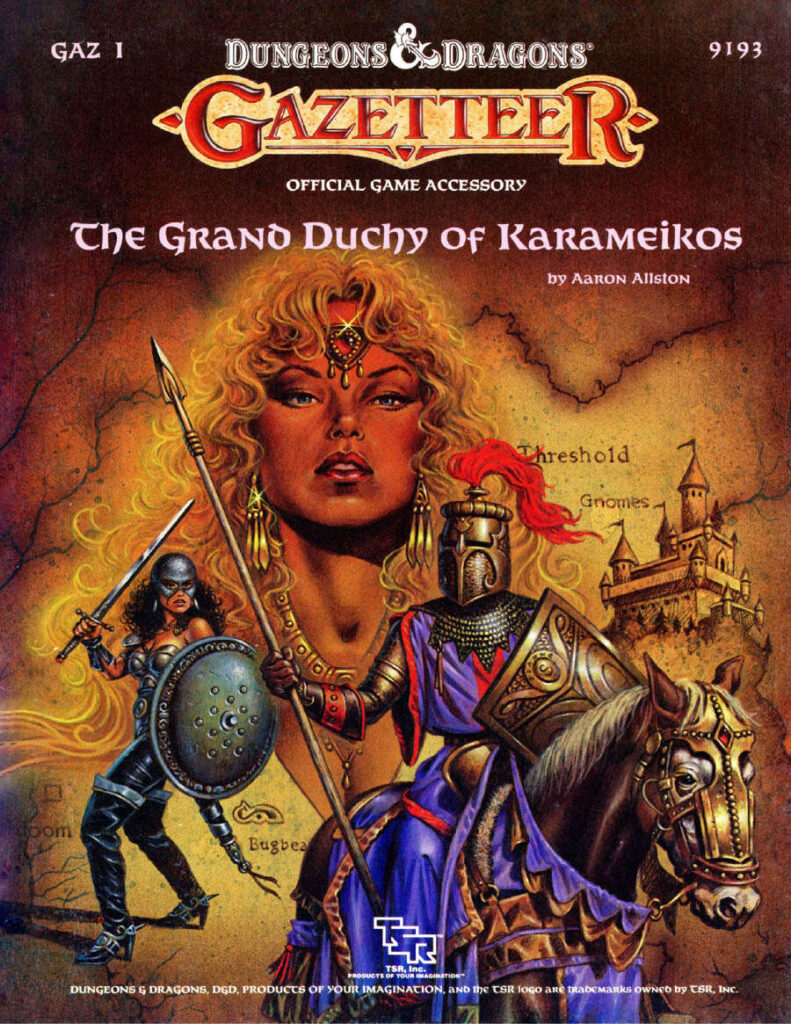
GAZ1: The Grand Duchy of Karameikos is often called the “Gold Standard” of D&D setting books. Published in 1987, this 64-page gazetteer came from the mind of the legendary Aaron Allston. Furthermore, it did something revolutionary. It transformed a map full of monsters into a living, breathing “story machine.”
If you want a setting where player backgrounds truly matter, Karameikos is your destination. Additionally, every town in this land feels like a powder keg waiting to explode. Consequently, it remains a favorite for DMs in 2026.
Part I: The Story Machine – A House Divided
The genius of Karameikos lies in its central conflict. In fact, this isn’t a simple battle of “Good vs. Evil.” Instead, two distinct cultures struggle for identity.
First, we have The Thyatians. These are the conquering elite. They brought Roman-style law and administrative efficiency. Second, we have The Traladarans. These native people are steeped in folklore. Because they worship legendary heroes like Halav, they dream of a “Golden Age” long past.
This tension creates immediate hooks. For example, a player might be a Thyatian noble. On the other hand, they could be a Traladaran rebel. Therefore, the drama starts before the first die is rolled.
Part II: The Ecclesiastical Divide
Even the gods are divided by ethnicity in this setting. The Church of Karameikos (Thyatian) focuses on the “Philosophy of the Unstained Spirit.” Consequently, it views local folklore as mere superstition. Meanwhile, the Church of Traladara is communal. It focuses on wisdom and the ancient legends of the Song of Halav.
| Feature | Church of Karameikos | Church of Traladara |
| View of Sin | A “stain” to be purified. | A weakness to be overcome. |
| Undead | Corruption to be destroyed. | Tragic spirits trapped by curses. |
| Vibe | Legalistic and Formal. | Communal and Mythic. |
Part III: Starting the Campaign – The Shearing
One of the best narrative devices in Karameikos is The Shearing. This is a native Traladaran rite of passage where young adults are cast out of their homes to find their own way. They are “sheared” from the family tree. In fact, they cannot return until they have made their fortune and proven their worth.
This provides the perfect answer to the age-old question: “Why are we risking our lives in this dungeon?” You aren’t just looking for gold. Instead, you are looking for your ticket back home.
Part IV: The Sandbox – From Threshold to Fort Doom
Karameikos is designed as a perfect sandbox. It offers diverse environments for every level of play. Currently, in 2026, many DMs still use this layout for its efficiency.
- Threshold: This is the quintessential starting town. It has strict laws, such as “no magic within town limits,” which force players to use their wits. Additionally, it is the perfect home base for exploring the northern mountains.
- Specularum (The Mirror City): This is a sprawling metropolis of 50,000 people. The population is roughly 75% Traladaran and 25% Thyatian. From the wealthy estates of “The Hill” to the dangerous slums of “The Nest,” it is a paradise for urban intrigue.
- The Black Eagle Barony: Every setting needs a villain. Baron Ludwig von Hendriks, known as “The Black Eagle,” rules the western reaches with an iron fist. He frequently recruits orcs and goblins to terrorize the local fishermen.
👉 [Grab the PDF or POD of GAZ1: The Grand Duchy of Karameikos on DriveThruRPG]
Part V: The Face of Infamy – Bargle the Infamous
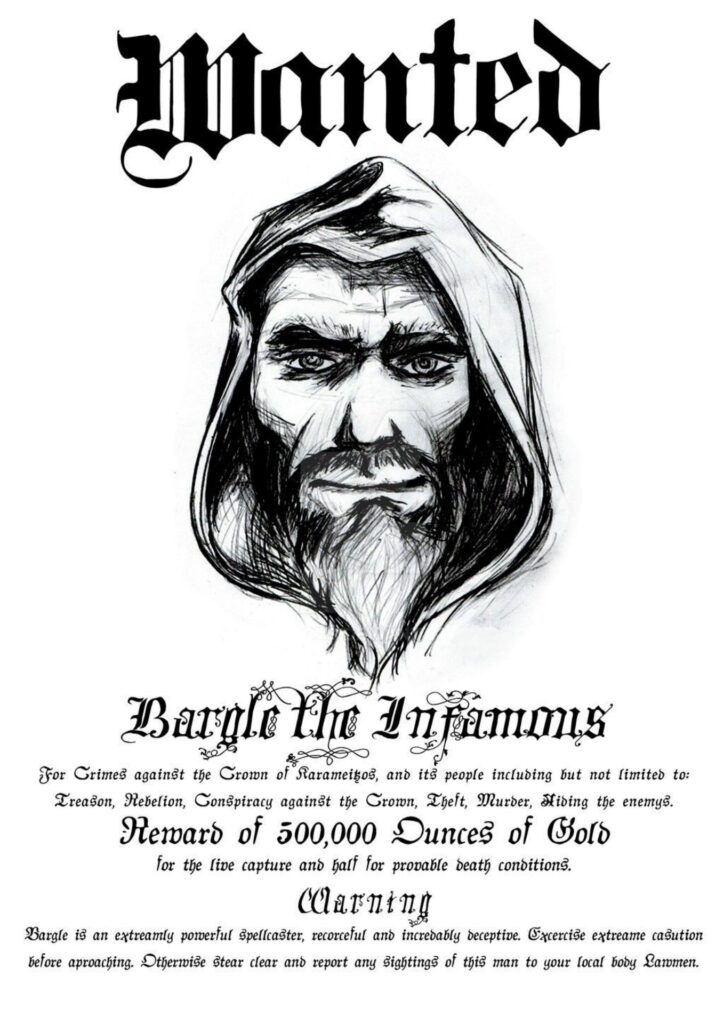
You cannot talk about Karameikos without mentioning the man who single-handedly made a generation of players hate wizards: Bargle the Infamous. If you grew up playing the 1983 “Red Box” Basic Set, Bargle was likely your first true rival.
Bargle is the court wizard to the Duke’s treacherous cousin, the Black Eagle. While the Baron provides the brute military force, Bargle provides the cunning. In fact, he is one of the most hated NPCs in D&D history.
Why Bargle is the Ultimate Villain
Bargle isn’t a dark god. Instead, he is something much more relatable: a sociopath with a fireball.
- The Master of Deception: Bargle specializes in illusions and charm magic. Consequently, he doesn’t just kill adventurers; he tricks them into leading him to the treasure first.
- The Puppet Master: He is the brain behind the Black Eagle Barony’s defiance of the Duke’s laws. His presence ensures that Fort Doom is a magical laboratory where humanoids are experimented on and dissenters are silenced.
Part VI: The Iron Ring – Corruption as a System
Bargle’s influence extends to the Iron Ring. This is a sprawling criminal syndicate that serves as the Duchy’s primary antagonist group. This isn’t just a simple band of thieves. Furthermore, it is a paramilitary slaving organization. This gives the DM a reason for high-stakes conflict in even the “safest” towns.
Part VII: 5 Adventure Hooks for Your Campaign
To help you get your sandbox running, here are five hooks pulled straight from the lore of GAZ1:
- The Shearing Debt: A local family’s “sheared” son has gone missing. He was last seen near the Dymrak forest. Was he taken by the Iron Ring?
- The Veiled Conspiracy: In the slums of Specularum, a member of the Veiled Society offers the PCs a job. They want you to “accuse” a rival merchant of treason.
- The Black Eagle’s Ransom: A group of Halfling traders from the Five Shires has been captured and held in Fort Doom. The PCs must infiltrate the Barony to get them out.
- Shadows of the Hutaaka: An ancient map in Threshold points toward the Lost Valley. However, the jackal-headed people who live there don’t want to be found.
- Bargle’s Revenge: A local wizard is found murdered. The evidence suggests Bargle’s signature style. Consequently, you must discover if the Infamous One is back.
Part VIII: Unique Mechanics – The First “Skills”
Long before 5th Edition’s proficiency system, GAZ1 introduced General Skills. Characters could be experts in things like Knowledge of Legend, Persuasion, or Riding. This added a vital layer of depth to the “Basic” D&D rules. Additionally, it allowed players to build characters that were more than just their combat stats.
Conclusion: A Living Legacy
GAZ1: The Grand Duchy of Karameikos remains a masterclass because it gives the DM more than just stats. It gives them motivation. Whether you are running Old-School Essentials (OSE) or a modern system, this book provides a framework that makes your world feel “dense.”
The Traladaran forests are calling. Are you ready to face the Black Eagle?